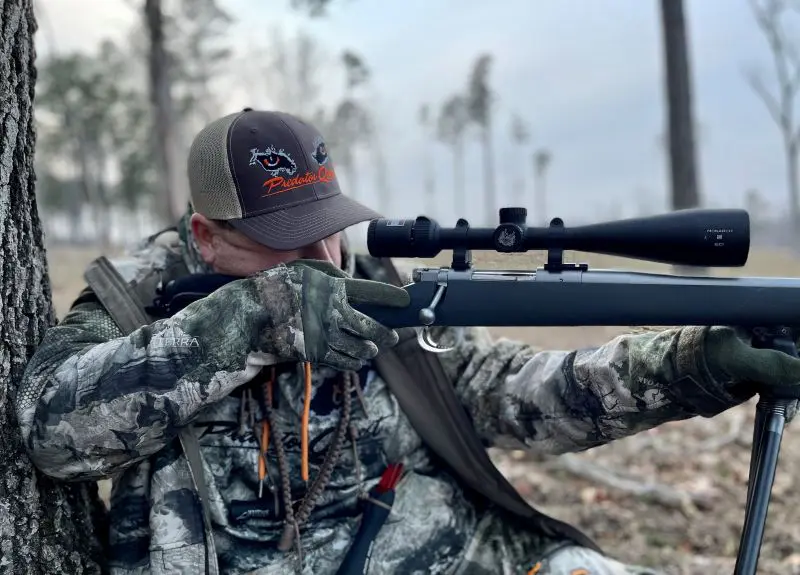
For many hunters, January and February mark the end of deer season and the start of cabin fever. But for predator hunters, late winter is when things really heat up. Coyotes are cold, food is scarce, and breeding season is underway; three factors that make January and February some of the most productive months of the year for calling coyotes.
After hearing coyotes yipping and howling in the distance, we went to bed, eager for the next day of coyote calling. I was in Oklahoma for a three-day coyote hunt during the peak of the breeding season in early February.
The next morning was cold, with the wind blowing anywhere from 10-12 mph, which was calm for western Oklahoma. We set up the first three calling stands and managed to call in a total of ten coyotes. A pair during the first sit, three on the second, and on the last stand, a group of five came to the sound of a female howl. It was a morning of action unlike any I had seen before. Coyotes were vocal; females were paired with males, and they responded eagerly to the call.
Understanding how coyotes behave during late winter, and how weather, terrain, and sound choices affect their next move, and can significantly increase your chances of success.
Seasonal Behavior Shifts: Survival Mode Takes Over
By late winter, coyotes are no longer cruising casually through their everyday home range. Easy meals are gone, prey animals are worn down, and calories are burned quickly to stay alive. This puts coyotes into a constant state of survival.
Unlike early fall when food is abundant, late winter coyotes respond aggressively to opportunities. A sound that mimics an easy meal or a territorial threat is far more likely to draw a response. Coyotes can’t afford to ignore a quick food source when they don’t know when or where they will eat next.
Another important change is the time of day when coyotes are most active. Coyotes tend to move both day and night, but slightly more during daylight hours in winter, especially on cold, clear days when conserving energy is essential. That means midday sets, which are often overlooked in other seasons, can be very productive.
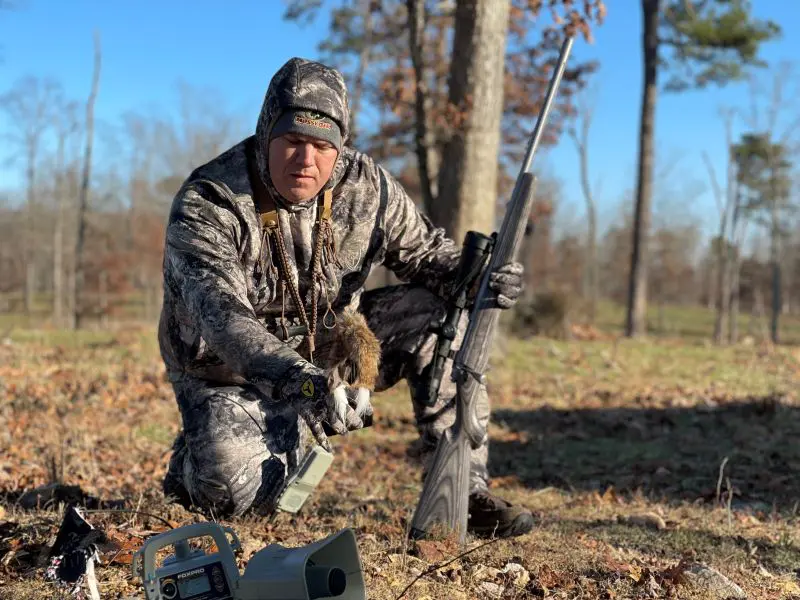
On a late February day a few years ago, I remember snow on the ground and sitting around the warm house with my family. At 11:00 a.m., boredom got the best of me, so I told my wife I was going to walk to a nearby field and set up a quick midday calling stand. After placing my electronic caller about twenty yards away, I immediately started playing a course rabbit in distress sound. Four minutes into the call, a large, fluffy male coyote burst out of the woods at sixty yards. With my .22-250 rifle ready, I let out a quick bark with my voice, stopping him broadside. I then took the shot and completed a successful hunt, all because a coyote was cold, hungry, and looking for an easy meal.
Hunger Pangs
As I experienced during my midday hunt, a snow covered or frozen ground limit access to small game like mice and voles, forcing coyotes to expand their travel routes or constantly search for food to warm themselves. They’re willing to cross open ground, cut daylight corners, and approach calls more aggressively than they would earlier in the season.
This hunger driven behavior is why prey-in-distress sounds are effective in January and February. Using sounds that imitate a dying rodent or a hurt rabbit, particularly ones in colder conditions, directly trigger a coyote’s will to survive.
Late winter can also increase competition. Coyotes understand that if they don’t act quickly, another predator might get to the meal first. This sense of urgency often leads to faster approaches with less circling and hesitation. It is the main reason I prefer to use a short sequence of howls before playing distress sounds during winter. The sound of howls signals the presence of another coyote nearby, resulting in quicker responses to the call.
Breeding Season – When Coyotes Are Most Vocal
January and February are the peak breeding season in much of the country, and with it comes an increase in vocalization. Coyotes are establishing a potential mate while defending their territory. This makes them far more responsive to vocal sounds than at any other time of year.
While hunting in southern Missouri and during my hunt in western Oklahoma, using coyote vocalizations such as howls, challenge barks, and female invitation howls are effective during the breeding season. These sounds evoke curiosity, aggression, and dominance responses, sometimes all three at once. A lone howl can attract coyotes from long distances, while a challenge howl can provoke a quick response from territorial pairs. As with my hunt, often coyotes come alongside one or two others, all eager to see who and what is making all the commotion.
Best Sounds to Use in Late Winter
While distress sounds work year round, certain sounds shine in January and February.
- Rodent-In-Distress – Subtle but deadly when prey is buried under snow
- Cottontail or Jackrabbit Distress – Still a staple when hunger peaks
- Coyote Howls – Lone howls and pair howls excel during the breeding season
- Challenge Barks – Effective when targeting dominant, territorial coyotes
As mentioned, my favorite breeding season strategy is to start my calling sequence with a lone howl. Wait a few minutes, then play a prey-in-distress sequence. These sounds grab both the curiosity and hunger, bringing in coyotes that might ignore a single sound.
Winter Setup Strategies – Terrain Matters
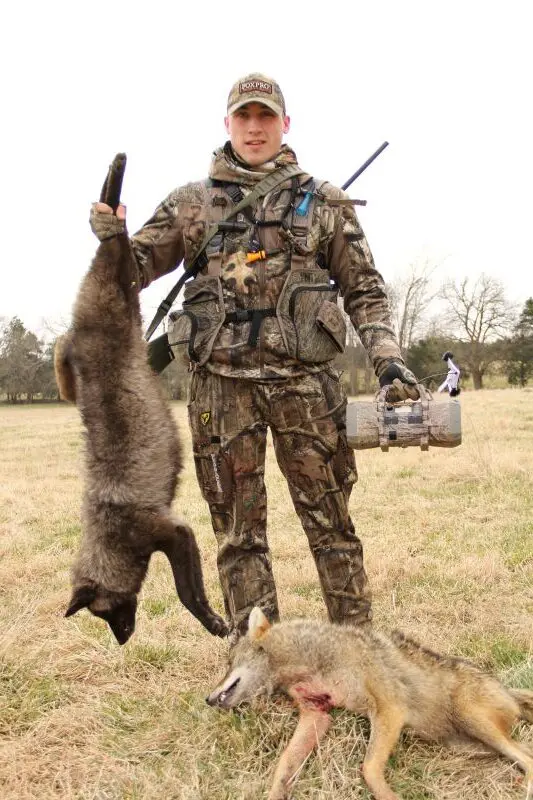
Late winter causes coyotes to follow predictable paths. Fence lines, creek bottoms, brushy draws, and snow covered field edges serve as natural travel routes. Using these areas for your calling setups, improve your chances of intercepting moving coyotes.
Visibility also improves in winter. With leaves gone and grass flattened by snow, coyotes can be seen from farther away, but remember the same applies in reverse. Choosing elevated positions and breaking up your silhouette are essential.
Always consider the wind when approaching stands. Coyotes depend heavily on their sense of smell, and winter air carries scents more effectively. Crosswinds often work best, as they force coyotes to reveal themselves while trying to get downwind of the call.
January and February strip coyotes down to their instincts. Hunger drives their movement, breeding season increases aggression, and winter terrain guides their travel. When predator hunters recognize these late-season changes and adjust their calling strategies accordingly, success often comes quickly.
Many hunters call it quits after deer season, but those who brave the cold are rewarded with some of the most fun and exciting coyote hunting. Late winter isn’t always a challenge; it’s an advantage for those willing to use it.