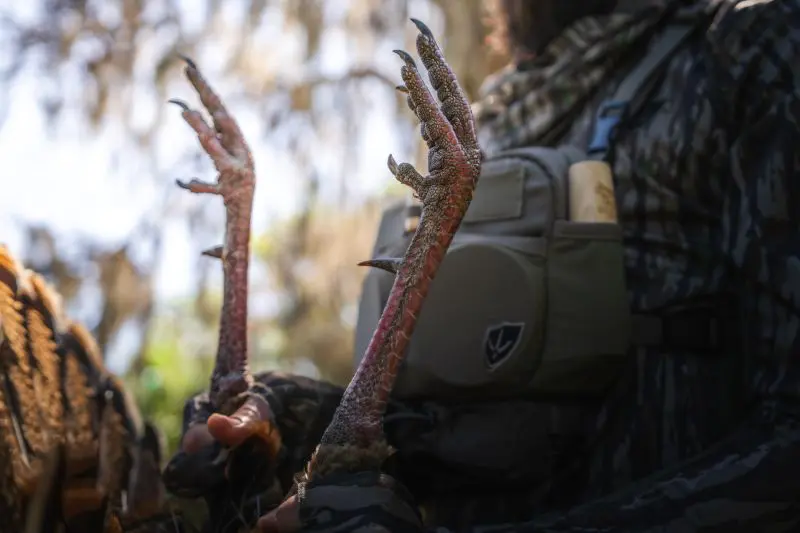
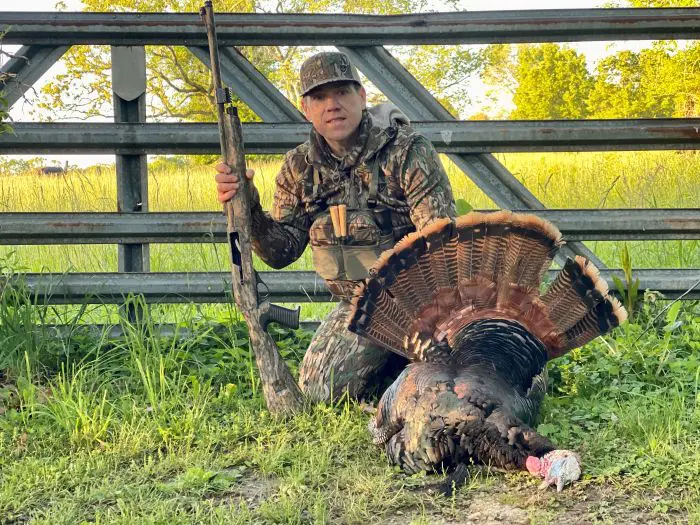
Late last spring, I was fortunate to be rewarded with a memorable hunt during the final week of Missouri’s turkey season. After several days of going back and forth with a couple of stubborn longbeards, I made an early morning trip to a friend’s farm, a place that has been my favorite turkey hunting spot for nearly ten years straight.
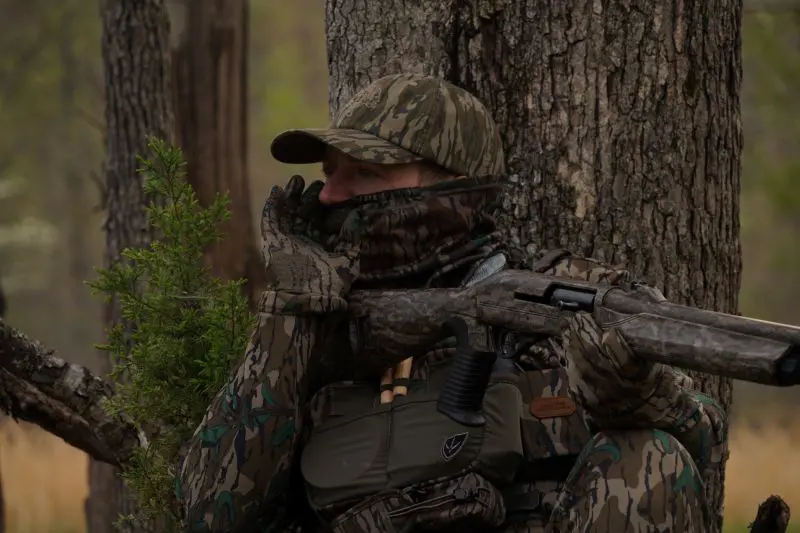
Already standing close by where the birds had been roosting for the past two weeks, I heard the first gobble of the morning. As I was hoping, the tom was roosting a mere eighty yards from where I was standing. With little to no light, I slowly moved to a large oak tree, slipped down into a seated shooting position, then easily retrieved two of my calls from my Blocker Finisher Chest Pack. After several times of the tom gobbling on his own, I made a soft tree yelp on my slate call, followed by another soft yelp on a diaphragm call. From the first call onward, the nearby tom gobbled multiple times. The anticipation of a hen close by got the toms’ attention, resulting in him pitching out of the tree that was eighty yards in front of my setup, and landing fifty yards to the right side, almost directly behind me. I made another soft call, which he cut off with a ground shaking gobble, then began easing up the hill back towards my shooting direction. When the tom made it to thirty-five yards, I pulled the trigger. At 5:54 that morning, I was standing directly over a nice southern Missouri longbeard.
There’s something about those first 30 minutes of daylight that separates average turkey hunters from consistently successful ones. When the woods are just waking up, and gobblers are still on the roost or have just flown down, you have a narrow window to make the kill happen fast. Killing a bird early isn’t luck; it’s preparation, positioning, and knowing exactly how to play that first interaction. Consistently tagging a gobbler before most hunters have even finished their morning cup of coffee is a feeling that never gets old.
Scout Like the Season Depends on It
Early success starts days, or even weeks, before opening morning. You need to know exactly where birds are roosting, not just generally where they hang out. I had spent multiple mornings before the season, listening from a distance, early in the mornings. That, and several encounters in the first two weeks of the season, led me directly to the tree where my bird was roosting.
Evening scouting can also be a turkey hunter’s best friend. Listen for fly-up gobbling or wing beats as birds go to roost. I like scouting or listening early mornings, which can help you pinpoint trees, but getting too close is always a risk of bumping birds.
When scouting for spring gobblers, try to focus on consistent roost trees along ridges, creek bottoms, or field edges. As well as strut zones nearby (logging roads, openings, field corners)
Get In Earlier Than You Think
If you want to kill a gobbler in the first 30 minutes, being “on time” means you’re already late. Plan to be set up at least 45 minutes before first light. Move quietly, avoid using flashlights, the light on your phone, or a headlamp when possible. Slip into position without alerting birds by taking your time and already having a map of where you are going in your head before leaving your truck.
Get in close, well before sunrise. The ideal setup distance is 75–125 yards from the roost tree. Too much closer and you risk getting busted on the limb even when turkeys haven’t begun gobbling or yelping. Too far and you lose control of the encounter. Again, all your movements towards where he is roosted should be done as early as possible.
Set Up Where He Wants to Go
One of the biggest mistakes hunters make is setting up where it’s convenient, not where the gobbler wants to be. Think about where hens usually go after fly-down, identify if there’s a nearby strut zone, and note any open area they prefer. Set up between the roost and that destination. Getting fewer distractions or obstacles between you and the roosting tom gives you the advantage of not calling him across the woods or a large field. Instead, you can be patient, especially with your calling, because you’re intercepting him on his natural path.
Tree Talk: Less Is More
When that gobbler sounds off while still on the limb, your job isn’t to outcall him; it’s to sound like the hen he expects to hear. Start with soft “tree talk”, and light tree yelps or soft clucks and occasional purrs. Keep it subtle, real hens don’t scream from the roost. It’s the same as humans; it takes time to wake up and get going. If he hammers back, resist the urge to get aggressive. You’ve already got his attention.
The Fly-Down Moment
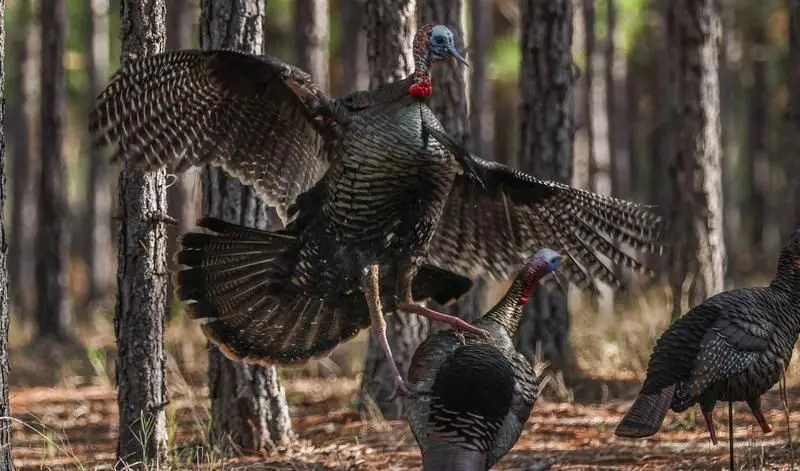
This is where the hunt is often won or lost. As daylight breaks and birds start pitching down, hit him with a slightly more excited yelp sequence. I will also increase intensity if another hen is calling nearby, while still on the roost. If she is excited and is giving the tom a reason to go to her first, I will also add wing flapping sounds (a hat or glove against your leg works great)
Mimic a hen flying down nearby, and he will want to fly down quicker as well. If done right, that gobbler believes a hen just landed within range, and many times, he’ll come in on a string.
Use Decoys (But Don’t Overdo It)
In early morning setups, decoys can seal the deal, especially in more open terrain.
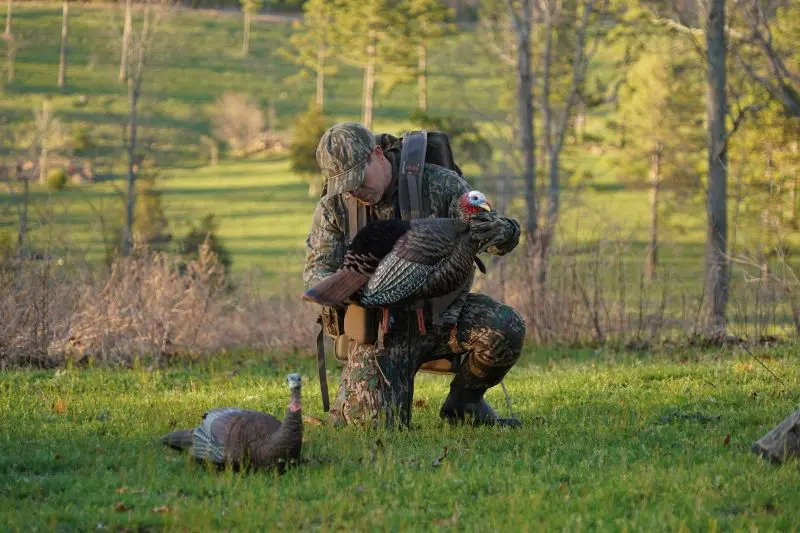
Simple setups work best, such as a single hen decoy or a hen and jake combo to trigger dominance. Place decoys 10–20 yards from your position, giving you a clean, close shot when the gobbler commits. The whole purpose of the decoy is to confirm that the hen is the one he heard fly down from the roost. Often, when he first makes eye contact with the decoy, he will be locked in.
Stay Ready – It Happens Fast
Early morning gobblers often come in quietly or quickly. One minute he’s gobbling on the limb, the next minute he’s in your lap. Be ready by having your gun up or always resting on your knee, and with minimal movement. Keep your eyes and ears scanning constantly.
Many birds are killed within minutes of flying down because hunters are prepared, not scrambling.
When It Doesn’t Go Perfect
Not every gobbler will cooperate. If he flies down with hens and goes the other way, don’t panic and don’t chase immediately. Mark the direction, then after a few minutes, loop ahead if possible and try again. Sometimes you won’t kill him in 30 minutes, but playing it smart can still put you on him mid-morning.
Killing a gobbler in the first 30 minutes isn’t about luck; it’s about stacking the odds in your favor before the sun ever comes up.
If you scout precise roost locations, slip in early and quietly, set up where he wants to go, and call just enough, but not too much, you’ll find yourself tagging birds while the woods are still waking up. And once you experience a gobbler hitting the ground and marching straight into your setup at first light, you’ll understand why that first 30 minutes is the time that veteran turkey hunters proclaim as the most addictive part of the season.