Late season is often seen as the last chance for the whitetail season. It is a time for cold sits, less daylight, and deer that seem to pay attention only to calories and danger. But for serious hunters, late season and even the weeks right after the season ends offer something more valuable than a filled tag: clarity about what happened during the past season and hope for what’s to come the following year.
With pressure eased, foliage cleared, and deer movement limited by food and survival, the landscape reveals the truth. The key is knowing which truths matter and which signs can mislead you. Late season scouting isn’t about chasing what was; it’s about recognizing what will still matter when next season begins. For example, if you’re hunting with others, such as on public land or leased private property, you probably shouldn’t put too much emphasis on rubs and scrapes from early fall. Many of those mature bucks have likely already been harvested. To truly benefit from late season scouting, you need to know what to keep and what to discard from your notes.
Why Late Season and Post Season Scouting Is So Valuable
Whitetails are at their most patternable during the late season. The rut is over, patterns narrow, and survival becomes more important than curiosity. Deer movement becomes easier to spot around food, bedding, and cover, and the woods open up in ways they never do in October.
Post season scouting is ideal because fresh snow, dirt, and settled leaves often reveal trails, beds, and travel patterns that were harder to see earlier in the year. Best of all, you can scout aggressively without fear of burning a stand or alerting a mature buck that’s still huntable. However, not all late season sign carries equal weight. Some of it reflects short term behavior driven by cold and pressure, while other signs reveal long term patterns that repeat year after year.
Intel That Matters in Late Season Scouting
Primary late season food sources are among the easiest to identify. Nothing matters more in the late season than groceries to a buck regaining strength from the rut, or to both bucks and does trying to put on extra pounds to survive harsh winter conditions. Deer are calorie deficient after the rut and winter stress. They will travel farther and expose themselves earlier in daylight for high energy food sources. When scouting, focus on standing corn or beans, cut grain fields, winter wheat, brassica food plots, and sometimes oak flats that held late dropping acorns if they haven’t been frozen multiple times, which causes them to rot faster.
Mark not only the food source but also where the deer enter and exit, especially during daylight. Entry trails, staging areas just off the food, and downwind edges are excellent ambush spots for next year, particularly in late October and after the rut. This matters because popular food sources often stay consistent year after year. The best late season food locations almost always influence early season and prerut movement. These are great places to mark now and set up stands later in summer or early fall next year.
Thermal and security bedding areas can also be exposed and used for intel for the next season. Late season bedding areas show where deer go when survival is the primary goal. When scouting, look for beds on south facing slopes that catch sunlight, thick cover that blocks wind, and overgrown CRP or clear cut edges.
Pay attention to single, oversized beds with good visibility or wind advantage; these are often mature buck beds. Observe how these beds relate to food and escape cover. Once again, this matters now because while bedding areas may shift slightly with seasonal winds, core areas remain consistent, especially for big bucks.
Travel corridors and natural funnels become easier to identify. Late season strip movement decreases, with a focus on the most efficient routes. Deer conserve energy by using terrain features such as saddle crossings, interior field corners, ditches and creek crossings, timbered points leading to food, and narrow strips of cover between open areas. These can all be marked to predict where deer will travel next season.
When trails converge closely late in the season, it’s a sign that those routes are preferred even when pressure is high. These are the same areas that bucks use during daylight in the early season and again during post rut cruising.
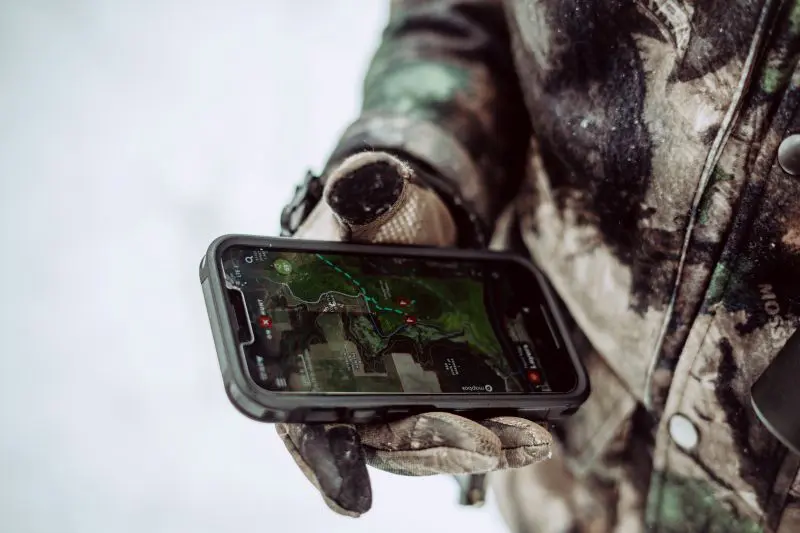
Find exit and entry routes near food. Where deer approach food is often more important than where they feed. Late season scouting reveals downwind approach routes, staging areas just off fields, and last-light movement corridors. In your notes or on your GPS hunting app, mark trees or ground setups back from the food source where deer linger before committing. You need to do this because these setups shine in the first weeks of the season, when deer are cautious but still daylight active.
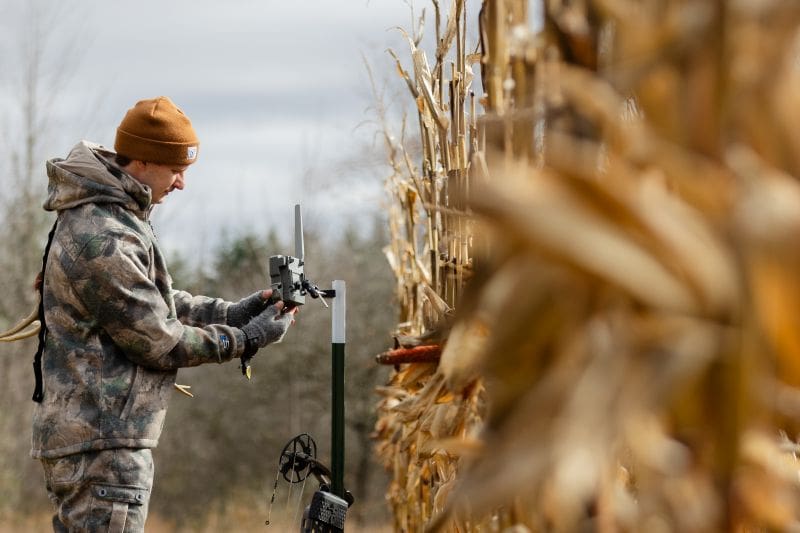
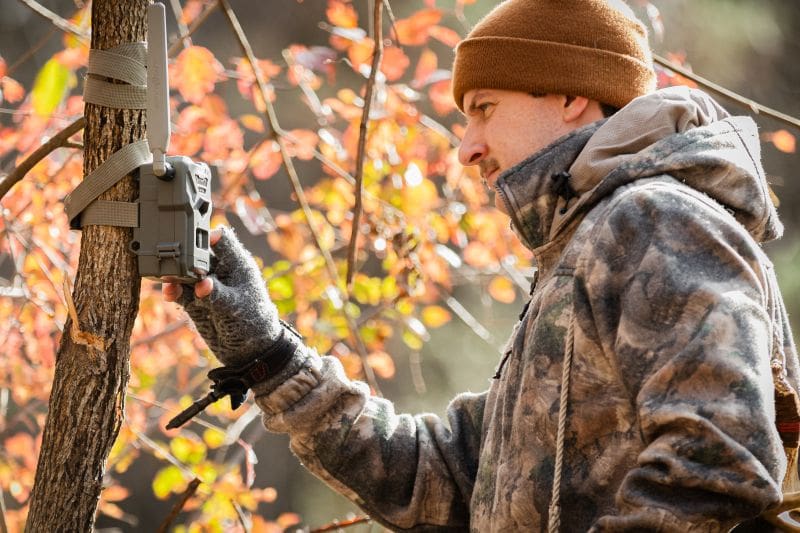
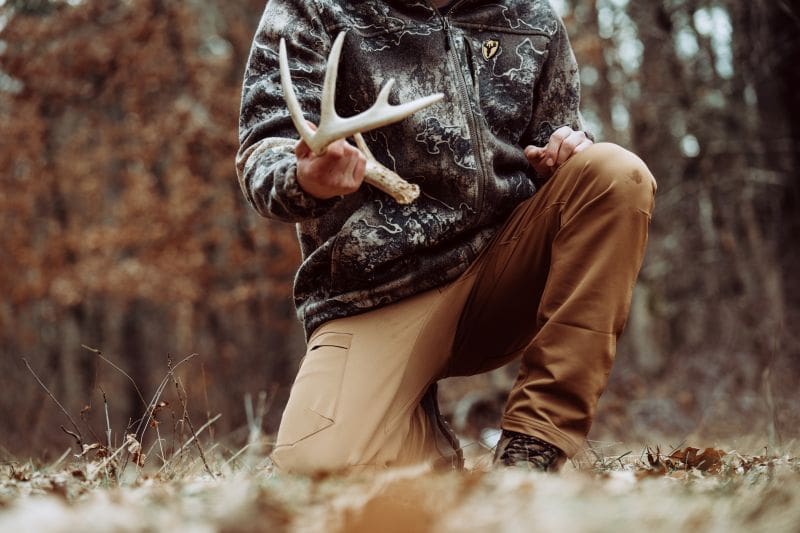
Identifying survivors or those who made it through the season is one of my favorite parts of late season scouting, especially when antlers start falling. Post season trail camera intel (where legal) can help determine which bucks survived. Shed antlers are another way to identify who made it. Also, look for larger tracks in the snow or mud. Large, widely spaced tracks, solo tracks, or specific movement patterns, and trails that avoid pressure areas are most likely made by a mature buck. Knowing a buck survived gives confidence to build a targeted plan around his core area rather than guessing, and it simply gives you that hope and excitement for what next season could bring.
Intel That Misleads Late Season Scouters
Rut signs, such as scrapes and rubs, are among the most common misleading findings during late season scouting. Late season woods are often full of rubs and scrapes that seem impressive, but many are historical marks from bucks that are no longer alive or have moved on to another area.
While it’s worth noting, major community scrapes or rub lines tied to terrain often appear in the same places each year, but that doesn’t mean it will be the same buck as last year. Most rut sign reflects behavior that no longer occurs after breeding ends and can bemisleading when scouting for future hunts.
Over concentrated food patterns are another one that can be misleading. When food is scarce late in the season, deer stack into one location. Hunters often assume that concentration equals a killable setup next season. That isn’t always the case. Many late season food patterns disappear when crops rotate, and pressure resets. Use these areas as reference points, but keep in mind that they don’t guarantee future stand sites.
How to Use Late Season Scouting Correctly
Think of late season scouting as mapping the groundwork for the hunt, not predicting every movement.
Focus on
- Terrain that funnels movement
- Core bedding and security cover
- Reliable food sources
- Access routes that avoid detection
Ignore
- One off tracks
- Historical rut chaos
- Winter survival instincts
Mark everything, then revisit those areas in the early season with fresh eyes and in season intel.
Late season and postseason scouting is one of the most potent tools a serious whitetail hunter has when used correctly. The woods are straightforward this time of year, but only if you ask the right questions. The goal isn’t to hunt January deer in October. The goal is to identify why deer move where they do, and which features shape their decisions regardless of the season.
Learn to separate meaningful patterns from seasonal noise, and you’ll walk into next fall with a plan built on the sign from scouting and not just guesswork.