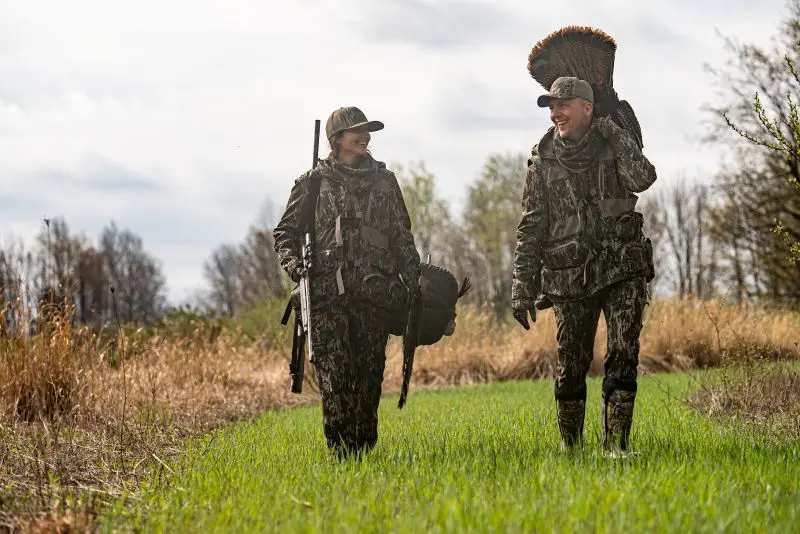
“I got drawn for a South Dakota turkey tag!” my good friend said with excitement. After leaving our home state last year for a chance at a Nebraska Merriam, my friend’s obsession with going out of state was only growing.
There’s something special about loading up the truck, crossing a state line, and hearing a different subspecies of gobbler thunder across unfamiliar ridges. As with my friend, traveling for spring turkey season can sharpen skills, expose someone to new terrain, and flat out make them a better hunter. But a successful out of state hunt doesn’t happen by accident. Whether you’re headed for public ground in the Nebraska hills or the wide open country of Texas, hunters must go into it knowing that it is going to be a little work, and preparation before the hunt is vital to ensuring they come back home with a memorable experience, enticing them to want to try another new place the following season.
Know Your Bird (And The Rules)
When a turkey hunter starts chasing gobblers across the country, they quickly become humbled that not all turkeys or turkey hunts are the same. Different regions hold different subspecies, and each one brings its own personality, terrain challenges, and hunting style. Easterns, the most widely populated and hunted species, are often found in hardwoods and big timber, especially on heavily pressured public ground. Hunting them typically means patient setups, subtle calling, and working tight terrain where visibility is limited. Rios, on the other hand, thrive in open country. They travel along predictable daily routes, such as through open fields and river bottoms, and are often in larger flocks, which can make for exciting, interactive hunts. The Osceola can only be found in Florida. Osceola’s live in thick flats and along swamp edges, where visibility is tight, and mobility can be tough. These birds demand careful movement by hunters and a willingness to enter dense cover. Out West, Merriam’s roam mountains and meadows, often offering long sight lines and the opportunity to spot birds from a distance before making a move. Terrain plays a massive role in how hunters approach each hunt, and understanding the tendencies of the subspecies in front of them can make the difference between just hearing gobbles and carrying a bird over their shoulder.
Check Regulations Early
Different species of turkeys and regions across the country each have their own unique characteristics. But, before you gas up your truck or buy your license, you must take into consideration each state’s laws and regulations.
You’ll need to pay attention to regulations such as specific season dates (with some states divided into zones), tag limits, shot size restrictions, and public land access rules. If the state uses a draw system, be sure you understand the requirements and steps to obtain a license or tag, and remember that some states now require electronic tagging or an app based check-in, so download the appropriate state wildlife app in advance.
As hunters, the last thing we want is to begin an out-of-state experience, breaking the law or not being properly licensed before the hunt has started, all because of an honest mistake.
Choose the Right Destination
One of my first jobs as a young teenager was washing dishes and bussing tables at a small town café. I often looked forward to the time of year when spring turkey season rolled around, and I would visit with out-of-state hunters who had their chance to chase our well populated eastern wild turkeys.
After my job was done, I would often sit down with hunters at a table for a visit. Maybe it was a little nosy of me, but I would often ask where they were from, where they were hunting, and what brought them to a small town in southern Missouri.
If you’re looking for classic Eastern turkey country, states like Kentucky and Missouri offer abundant public land and strong bird numbers. This was typically the answer from hunters when they visited the local café. Lots of public land access and a healthy number of turkeys would bring hunters from Mississippi, Alabama, and even states farther north, such as New York or Pennsylvania.
As for my good friend, he and his buddies were seeking an adventure chasing hunt with a chance at a Merriam’s, which many hunters consider the prettiest and most desired to hunt of the four main subspecies of turkeys found in the United States. If a Merriam’s is on your list, consider South Dakota, Nebraska, or the Rocky Mountains of Colorado.
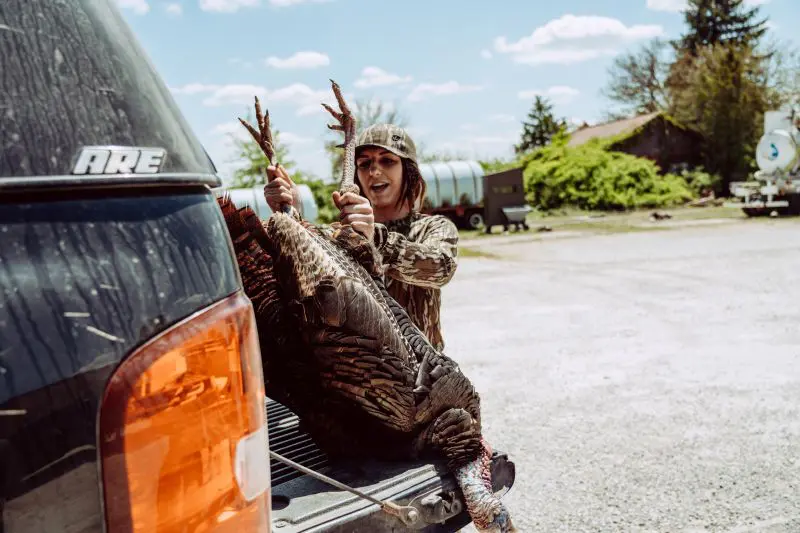
If you’re after rare turkeys and different species, many turkey hunters dream of tagging a true Osceola. This is often the missing species for many turkey hunters to complete a grand slam, which is harvesting all four of the subspecies of turkeys. What makes this the hardest to achieve is that you’ll need to head to Florida, because this is the only place they exist.
When picking a state, ask yourself:
- Do I want high bird numbers or a trophy experience?
- Am I bowhunting or shotgun hunting?
- Do I want DIY public land or semi-guided/private ground?
- How much driving time do I realistically have?
Scouting From a Distance
Scouting before the season is the best way to be prepared for opening day. However, when traveling to another state, many hunters don’t have the chance or the ability to scout because it is too far to drive or because it would cost too much to make two separate trips. The good news is, you don’t have to step foot on the property to start scouting.
In today’s hunting world, digital mapping apps and an endless source of information on the internet can have you ready to go, all from a few taps on your phone.
By using a hunting app such as OnX Maps, HuntStand, or Hunt Wise, hunters can identify ridges and benches that often make good roosting areas. Hunters can also find field edges and strut zones, water sources in dry country, and mark in advance potential access points to avoid private land boundaries.
Social media or other online forums are also great places to ask whether other hunters have had success or for advice on where to hunt, and even where the best lodging and restaurants are in the area.
Once you arrive in the area, whether it’s a few days before your hunt or on a separate scouting trip, covering ground is still essential. In open country (Rios or Merriam’s), glassing from roads or high points can be effective. In big timber (Easterns), focus on terrain features that naturally funnel birds. And again, travel along nearby roadways to obtain a visual of where birds are located and which part of the breeding stage they are currently in. If legal in the state you’re hunting, pulling into nearby areas and using a locator call is a great way to find gobblers, days before hunting.
What Gear to Pack for a Turkey Road Trip
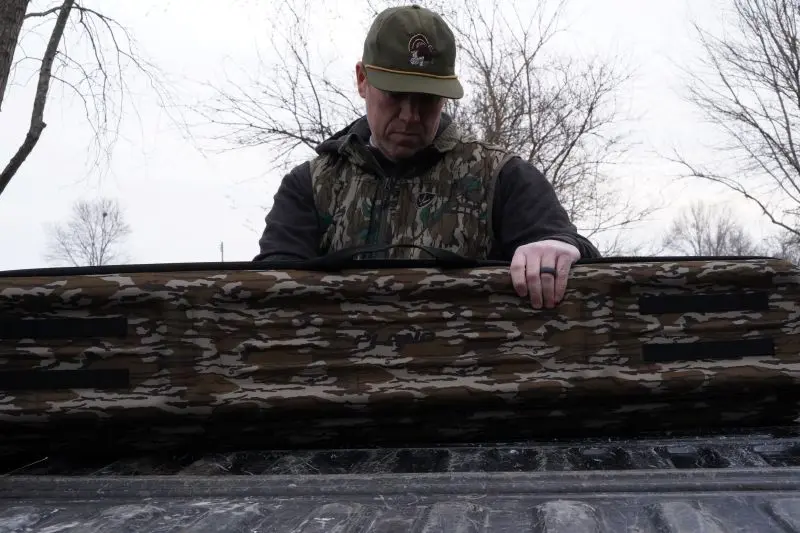
Travel hunts require balancing preparedness with mobility. One of the most aggravating and disappointing things when traveling out of state is arriving to hunt and realizing you forgot vital hunting gear at home. I’ll make this easier for those getting ready to travel this spring by creating two essential gear checklists.
Essential Hunting Gear
- Shotgun or bow (plus extra broadheads or choke tubes)
- Ammo (extra shots, and shot that have been patterned before you leave)
- Multiple turkey calls (don’t rely on one)
- Crow or owl locator call
- Lightweight seat or vest
- Decoys (if terrain allows)
- Face mask and gloves
Clothing for Changing Weather Conditions
Spring weather can swing wildly from state to state. And in some cases, day-to-day. One day it could be warm and sunny, then the next, pouring rain or an unseasonable cold front.
- Lightweight camo
- Mid-layer insulation
- Quality rain jacket
- Extra socks
- Snake boots or gaiters (if applicable regionally)
- Essential Extras
- Mapping app downloaded for use offline
- Portable power bank
- Headlamp (plus backup batteries)
- First aid kit
- GPS or compass backup
If you’re bowhunting, add:
- Rangefinder
- Extra release
- Lightweight knee pads (you’ll crawl more than you think)
- Lodging Options
One of the most memorable experiences of an out-of-state turkey hunt isn’t always the hunt itself. After the hunt is over, many hunters want a place they can relax, have fun with a group, and get some quality sleep each night before hunting the next day.
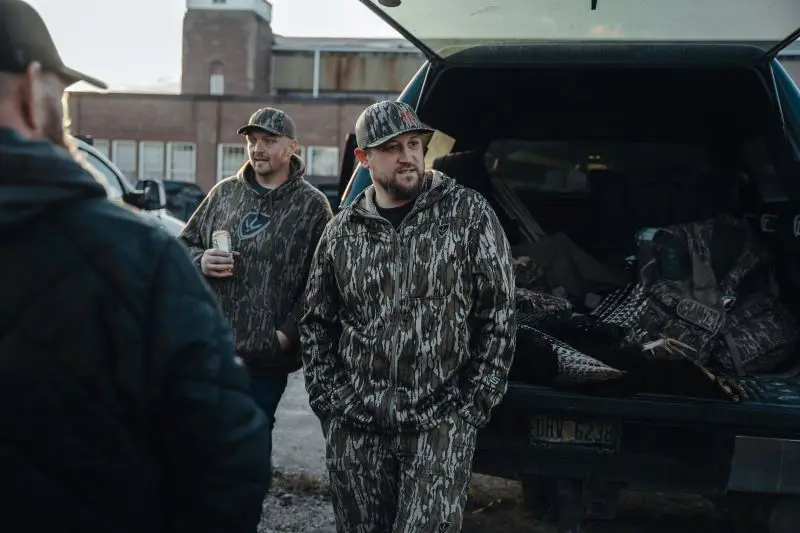
For years, traveling turkey hunters have found budget motels that offer a warm, dry place to sleep in a real bed with the option of a continental breakfast each morning. However, lately, the trend amongst small groups of friends who like to travel to hunt has been to use Airbnb to make their hunts more enjoyable. A small group can split the cost and stay more comfortably.
If roughing it in the backcountry is more your style, try campgrounds near public land or truck camping areas. Also, check out nearby state parks that allow free or low-cost camping. If you’re camping, keep gear organized in bins. Nothing wastes more morning time than digging through a chaotic truck bed at 4:15 a.m.
Go With the Right Mindset
Travel hunts can be humbling. Birds may not gobble, the weather could turn nasty, and public land may feel crowded. But that’s all part of the challenge, and the reward. Tagging a gobbler 600 miles from home, after learning unfamiliar terrain, adjusting your tactics, and putting in the hard work, makes the hunt feel that much more memorable.
Turkey hunting in a new state isn’t just about punching a tag, it’s about the experience. Sunrise in new terrain, different sounding turkeys, and dissimilar dirt on your boots, it’s all part of the memorable experience. A spring turkey road trip forces you to simplify, adapt, and trust your skills. Do your homework, pack smart, stay flexible, and be willing to move when things aren’t working. Because sometimes the best gobble you’ll ever hear is one you drove all night to find.