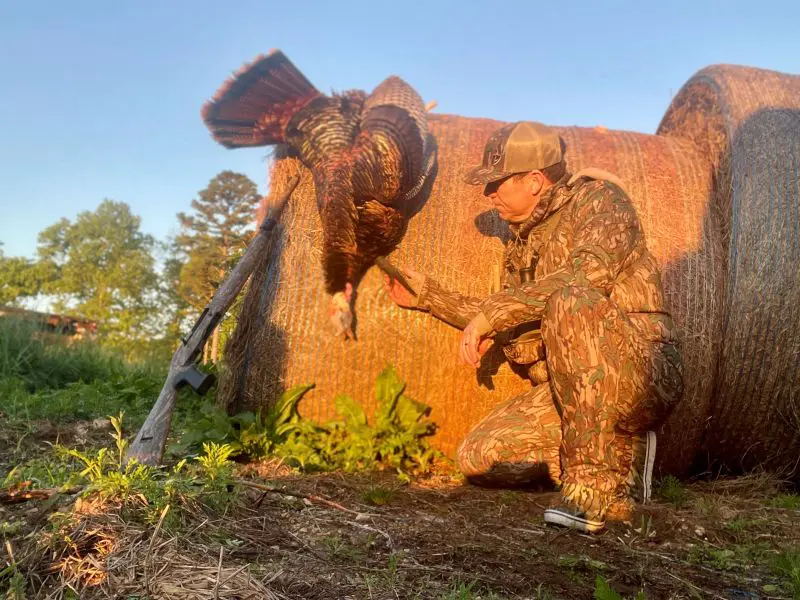
Hunting the beautiful Ozark river country of southern Missouri is one of the most rewarding experiences a turkey hunter could ask for, and I’ve been fortunate enough to spend many seasons chasing birds there. However, after days of scouting and hunting turkeys in the lower river bottoms, opening morning can quickly change your plans when the only gobbling you hear echoes from the top of a steep bluff. Suddenly, those same scenic river bottoms and towering rock bluffs that make the Ozarks so special become a challenging obstacle standing between you and a close encounter with a gobbler.
With daylight breaking across the bottoms and only a single gobbler sounding off from high atop the bluff, it became clear that sitting still wasn’t going to be an option. With no other gobbling activity anywhere nearby, it was time to get mobile and make a move that I could only hope would pay off.
A brisk twenty minute hike back to a farm road winding through the bottom offered the only practical route upward, serving as a natural ramp that might allow me to climb back to the same elevation as the tom still sounding off on the roost.
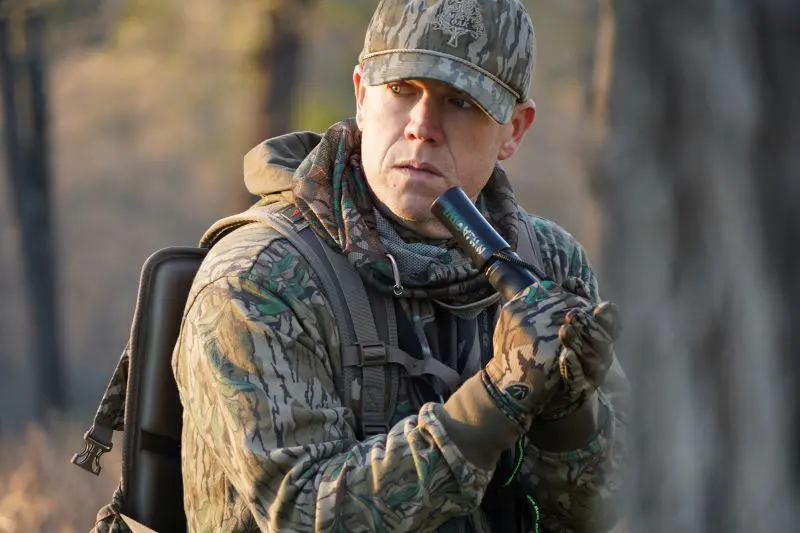
Out of breath and soaked through my base layers from the climb, I pushed my way toward the area where I believed the tom would be gathered with his hens. By then, it was mid-morning, so I pulled out my crow call and fired off three sharp bursts, hoping to trigger a shock gobble. Instantly, he answered. The bird was right where I had hoped he’d be. I quickly slipped into a position that would allow me to call and, with luck, pull the tom in my direction.
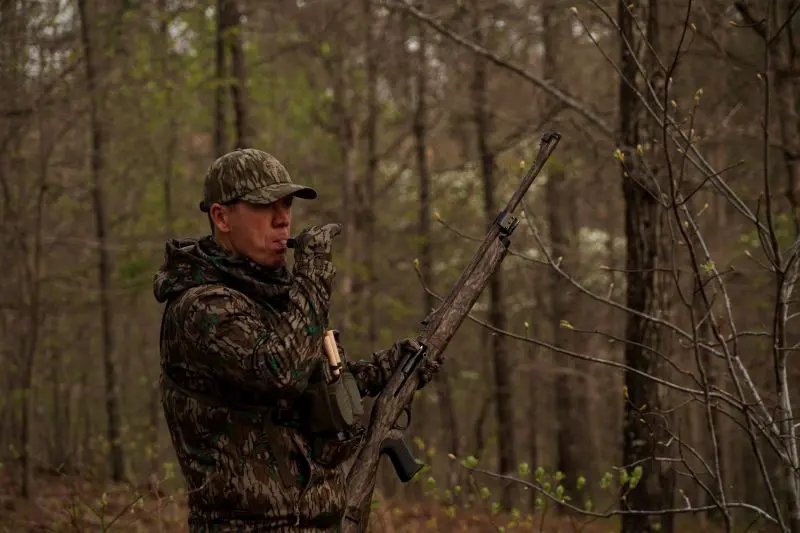
Using a diaphragm call, I offered a few soft hen yelps and listened closely. There was no gobble in return, but moments later, I caught the faint, unmistakable sound of drumming. I slowly eased up just enough to peek over the hill, then dropped back down even faster. The tom stood only eight yards away, accompanied by two other longbeards, all moving in fast. Within seconds, three red and blue heads crested the ridge. At forty yards, I clicked off the safety, settled the bead, and pulled the trigger. Another Ozark river country gobbler was down, proof that sometimes mobility makes all the difference.
Turkey hunting has evolved. Between lightweight gear, better mapping apps, and the run-and-gun approach, mobile hunting has become a go to tactic for many spring hunters. But mobility isn’t always the answer. Sometimes the smartest move you can make is to sit still and let the woods work for you.
Knowing when to move and when to plant your back against a tree can be the difference between tagging a gobbler and walking out with nothing but stories.
When to Be a Mobile Turkey Hunter
When A Different Set Up Is Needed
Successful turkey hunters understand that mobility is a tool, not a constant strategy. One of the clearest times to go mobile is when a bird fires off repeatedly on the roost but goes silent after fly-down, or, as on my hunt, they are in the wrong location from the start. These gobblers are often on a mission, trailing hens or traveling toward a destination. Sitting patiently in one spot can quickly turn into a long, unproductive wait. In these situations, closing the distance, circling ahead, or repositioning to a completely different area allows the hunter to strike the bird from a new angle. In my case, a new angle was all I needed to make the shot happen.
Large Tracts Of Land
Mobility also becomes a vital tool on large tracts of land, whether private or public, where increased hunting pressure or vast terrain encourages birds to cover ground. Using a run-and-gun or mobile approach helps to avoid other hunters by going farther into an area. It can also help you slip past pressured gobblers and locate less disturbed birds that are deeper into the property. Covering ground increases opportunity, especially when birds are scattered or call shy due to heavy calling pressure.
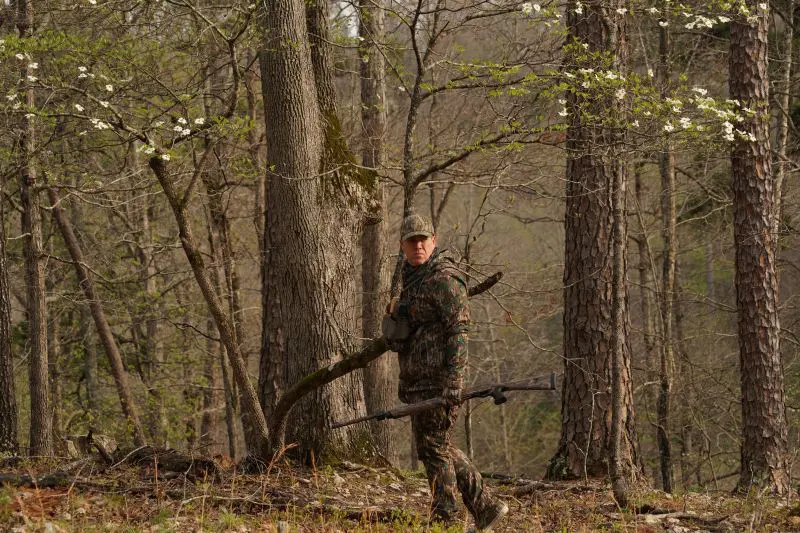
Mid-morning, particularly between 9:30 a.m. and noon, is another prime window for mobile tactics. As hens leave gobblers to nest, lonely toms often begin roaming in search of company. Many hunters call it quits for the day when toms become less vocal. Yet hunters willing to move can use locator calls, such as a crow call, to cover lots of ground while trying to locate a gobbler. When he finally gobbles, quickly set up and make those soft hen yelps to bring him into close shooting range. Run-and-gun methods late in the morning can be extremely effective during this overlooked time of day.
When To Avoid Being Mobile
A mobile style of turkey hunting has undoubtedly been a trend in recent years amongst hunters and even within the hunting industry. However, movement isn’t always the right decision. When a hunter is already inside a gobbler’s comfort zone, typically within 100 yards, and the bird knows the caller’s location, unnecessary motion ruins more hunts than poor calling ever will.
I recall watching an educational/instructional video on turkey hunting with veteran turkey hunter Eddie Salter when I was a teenager. I watched this video repeatedly while trying to sharpen my skills. One piece of advice that Salter gave was referring to a gobbler’s hearing. He noted that a turkey can pinpoint the exact tree you are sitting in from several yards away. He shared a story of a hunter who had been calling, then the bird went silent. After several minutes, the hunter decided to get up and try to make a move. Several minutes later, after no success, the hunter returned to the original setup, only to see the gobbler fly away. If he had stayed still, he would have gotten the shot.
At close range, patience and timing become crucial. Soft clucks and purrs, paired with staying completely still, consistently outperform aggressive repositioning. When a gobbler is committed and steadily closing the distance, impatience can cost you; stay there and wait. In the video, Salter also finished by saying that he had a tactic: when he thought the hunt was over and the bird was not going to come closer or gobble again, wait two minutes. He stated he killed more turkeys after those two minutes, simply by forcing himself to be more patient.
Many birds are lost when hunters attempt to gain just a few more yards, only to be spotted the moment they stand. If scouting has revealed consistent travel routes such as strut zones, logging roads, or field edges, setting up early and allowing the bird to move naturally through his routine is often the smarter play.
Minimalist Gear To Go Mobile
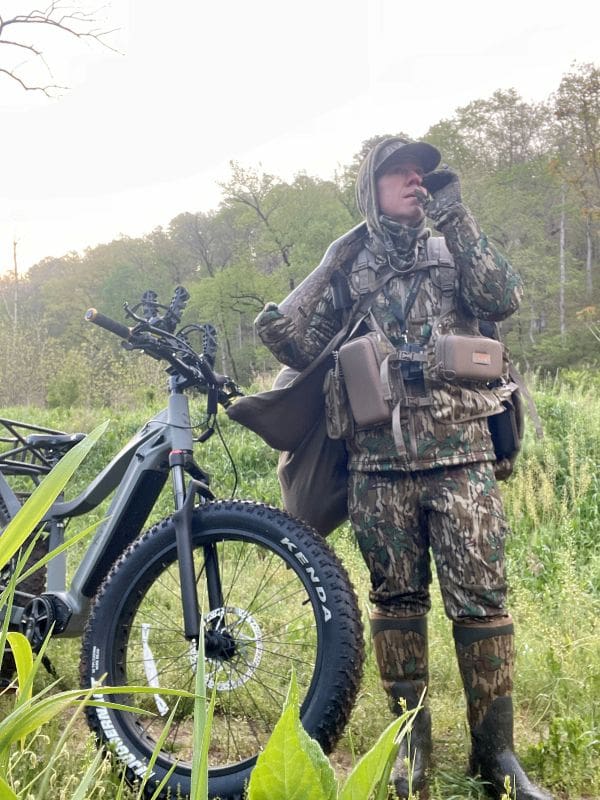
For hunters embracing a mobile approach, gear selection plays a major role in effectiveness. Heavy vests, excess decoys, and unnecessary accessories quickly turn miles of turkey hunting into a ruck sack session. New designs in the hunting industry are designed for run-and-gun hunting that allow hunters to stay light and mobile while maintaining access to essential equipment. The Blocker Outdoors Finisher Chest Pack offers compact storage for mouth calls, a pot call, shells, gloves, and other necessities while eliminating the bulk of traditional setups.
This year, the Chest Finisher Pack Pro keeps gear high, balanced, and easily accessible without interfering with gun mounting or movement through thick cover. Plus, an added seat to keep the hunter comfortable. Lightweight systems reduce fatigue, improve mobility, and keep hunters focused on covering ground effectively.
Ultimately, the most successful turkey hunters strike a balance between aggression and patience. They read the gobbler’s attitude, hen activity, hunting pressure, and terrain before deciding whether to move or stay put. Some days reward those bold moves, such as walking a mile in circles to get in a better position, and those rapid setups, while others demand patience and discipline. The key lies in recognizing the situation at hand, moving when a bird is moving, and remaining still when he’s committed. Mobility is a powerful tactic, but knowing when not to use it accounts for just as many filled tags. And when the decision is made to move, carrying only what enhances efficiency ensures every step works in the hunter’s favor.