April is the month turkey hunters wait for all year. Gobblers are fired up, the woods are coming alive, and every sunrise feels like it might be the one. Unfortunately, it’s also when many hunters make critical mistakes that turn close encounters into blown opportunities. April is the prime month for birds to be vocal and responsive across much of the country. Early in the month, gobblers can be wary, henned up, and quick to change the script. Later in the month, they get skeptical because of hunting pressure and call shy because they have had their butt whipped by another gobbler. Turkey hunting is fun, yet there is always a challenge, making hunters work for their trophy.
If you want to tag a gobbler this April, avoid these five common mistakes and tighten up your approach.
Mistake #1: Calling Too Much, Too Soon
The Problem:
It’s hard not to get aggressive when a gobbler answers your first yelp at daylight. Especially early in the season, when hunters are excited to be back in the woods and anxious to get a gobbler fired up. Many hunters immediately ramp up the volume and frequency, trying to “seal the deal.” The issue is that early season toms often already have hens. Overcalling can make you sound unnatural, or worse, make the bird expect the hen (you) to come to him. Think about when a young guy is dating; if he comes off desperate and begging, it’s a turnoff. A little mystery and challenge build attraction. Same idea here: make the hen curious and come to you.
How to Prevent It:
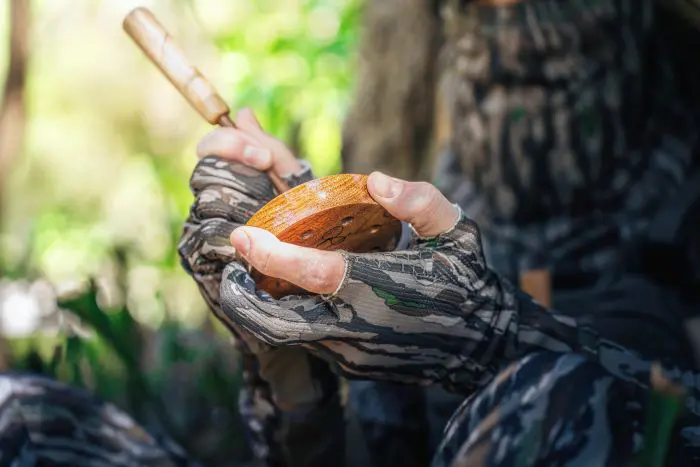
Start soft and subtle. Tree yelps, clucks, and purrs are often all you need before the turkeys fly down from the roost. Let the gobbler dictate your next move. If he’s hammering at every sound you make, that’s your cue to back off, instead of calling more. Sometimes the best move is to remain silent after initial gobbling. Make him hunt for you.
Mistake #2: Set Up Too Far Away
The Problem:
Hearing a gobble at 150 yards away feels “close enough,” but in turkey hunting, that distance can often kill your chances. Factors such as terrain, hens, and obstacles, like a fence or a creek, can all stop a bird before he ever gets within range.
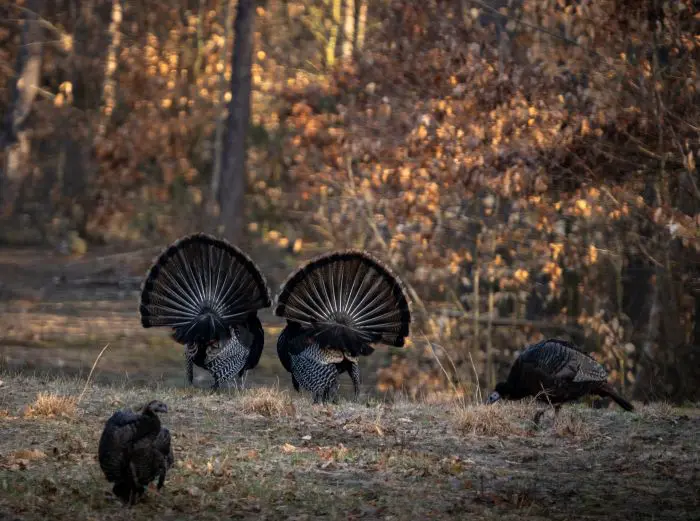
A few years ago, while hunting near my home in southern Missouri, I stumbled on three toms gobbling on the side of a steep river bottom hill. I, being on the opposite side of a bottom field, thought to set up on my side of a hill, so that I could see them coming across the large field that was between us. Soon, the birds came walking down a logging road, leading into the bottom field. When they got in the field, they were still a little more than a hundred yards away. Well out of range. With no decoys and no real hens in between the three toms and my setup, the birds hung up, then ten minutes later, lost interest and went on about their business. I was too far away, leaving too much open space between the birds to keep their interest.
How to Prevent It:
Close the distance between the gobbling tom and where you set up. Hunters catch themselves thinking, I should have skirted the edge of the field and gotten on their side before setting up. Use terrain like ridges, creek bottoms, or logging roads to move quietly and, if possible, get inside that 100-yard mark. The closer you are at first contact, the better your odds of a tom coming to the call. Don’t push too aggressively and risk bumping the bird, but get as close as you can.
Mistake #3: Ignoring Real Hen Behavior
The Problem:
Too many hunters prefer to imitate a competition caller rather than a real hen. Perfect yelps and flashy sequences might sound good to you, but wild hens are often inconsistent, subtle, and even downright quiet. One of my favorite tactics is to mimic a hen’s vocalizations. Every sound she makes, I do the same thing back at her. It gets her fired up, which then gets the tom fired up as well. This tactic works, yet I often call too much or try to be too fancy.
How to Prevent It:
Listen to real turkeys. Mimic their cadence, not just their sound. Use your hand to imitate a hen scratching in the leaves. When calling, use soft clucks, and pause occasionally to add realism and to make a tom curious. If you hear real hens, match their tone. Sometimes, cutting off a hen or mimicking her sounds can pull a gobbler your way better than calling directly to him.
Mistake #4: Poor Setup and Lack of Patience
The Problem:
Hunters often pick a tree quickly without considering shooting lanes, background cover, or the direction the bird will approach. Then, after 20–30 minutes without action, they start thinking about how much better it would be if they were setting a little farther up the hill or a little closer to the field, or they get restless and move. Typically, the result is then spooking the bird that was silently working its way in.
How to Prevent It:
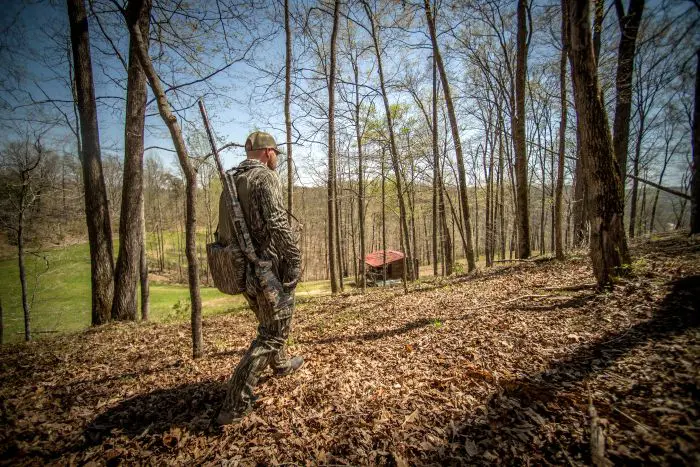
Take an extra minute to set up right. Sit against a wide tree, clear your shooting lanes, and position yourself where you can see the expected approach. Once you’re set, commit to it. Early season gobblers frequently go quiet but still come in. If you heard him, there’s a chance he’s coming, just slower than you’d like. Again, this is also where many hunters start trying to overcall. Instead, stay realistic and let him naturally come to the soft calling.
Mistake #5: Not Adapting When the Plan Falls Apart
The Problem:
April hunts can sometimes not go exactly as planned. Birds hang up, drift away with hens, or stop gobbling altogether. Many hunters either double down on a failing strategy or give up too soon. This could also be the case after a miss. Even when a shot opportunity is missed, don’t give up.
How to Prevent It:
Stay flexible. If a gobbler hangs up, try circling ahead or going silent if he’s henned up, back out, and reposition later in the morning when hens leave to nest. If he goes quiet, don’t assume he’s gone, he may be slipping in silently.
April turkey hunting is a game of discipline and patience. The birds are vocal, but they won’t tolerate many mistakes. The hunters who consistently tag out aren’t always the best callers; they’re the ones who read the situation, stay flexible, and avoid common pitfalls. Slow down, think like a turkey, and let the woods work for you instead of against you. That’s how April mornings turn into filled tags.