
Finding Whitetails When October Food Sources Shift
October can be one of the most frustrating months of the whitetail season. Yet, for some reason, as deer hunters, we spend the summer waiting eagerly for this month of deer hunting. The truth is, it doesn’t have to be frustrating; it can actually be one of the best times in the wood that hunters have.
Coming out of September and into the first week and a half of October, hunters may have a mature buck patterned between his bedding area and a food source. A buck may be showing up on trail cameras at nearly the same time every evening, and everything seems to be falling into place. Then, seemingly overnight, the buck disappears, and the food plot that was covered in deer suddenly isn’t getting used as much; trail-camera pictures become fewer and farther between. Then, that stand that produced several good encounters suddenly feels dead with the flip of a switch. Welcome to the October lull.
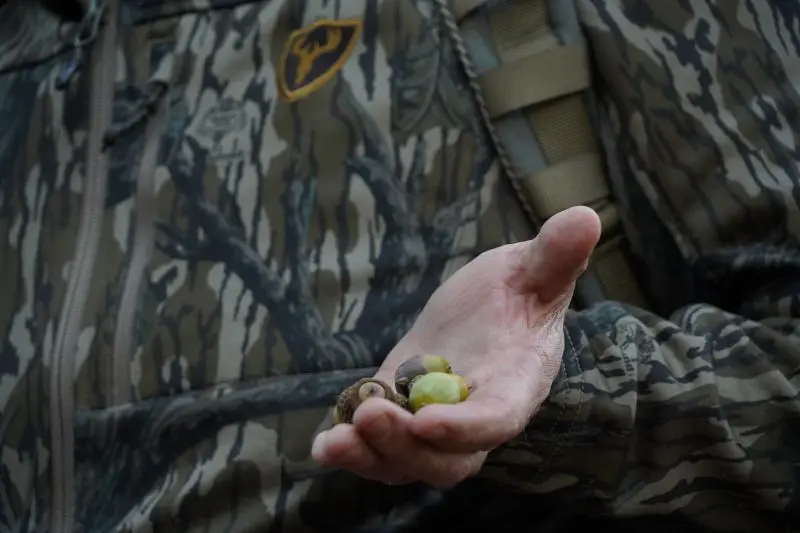
While weather, hunting pressure, and shorter daylight hours can all influence deer movement, one of the biggest factors is often hiding in plain sight: food. When October arrives and the acorn crop begins to fall, everything can change. As white oaks, red oaks, and other mast-producing trees start dropping their nuts, deer have a reason to alter their daily routines. Their preferred food source can shift overnight, and when it does, hunters need to be willing to shift with them.
The October Food Source Shift
Early October can be a relatively predictable time to hunt. Bucks are often spending much of their time in or near their summer ranges, and their movements can revolve around familiar food sources. Ag fields, food plots, green browse, and other high quality foods can draw deer into predictable areas. But then the acorns begin to fall.
A mature oak dropping hundreds or thousands of calories worth of food onto the forest floor can completely change the equation. Deer don’t necessarily have to walk across an open field to find something to eat anymore. Instead, they can stay inside the security of the timber and feed on acorns. That is when a hunter may notice what appears to be an October lull. The deer haven’t necessarily stopped moving. They’ve simply changed where they’re moving.
Don’t Abandon the Timber
One of the biggest mistakes a hunter can make during this transition is continuing to hunt the same food sources simply because they produced earlier in the season. If deer were hitting a food plot every evening in early October, it can be tempting to keep sitting over that plot even after the activity begins to disappear. Instead, start looking into the timber.
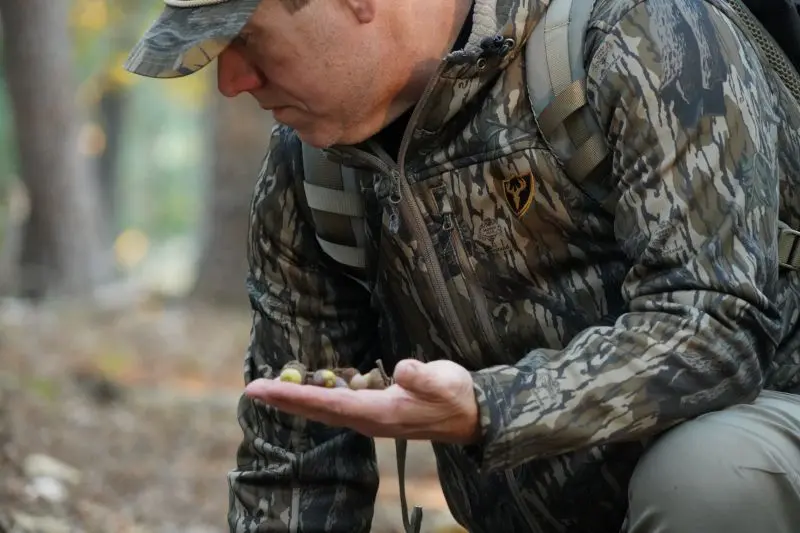
When early to mid-October hits, hunters start to scout to find out where the deer have gone. First thing, find the oaks. More importantly, find the oaks that are actually producing.
Not every oak tree is going to be equally attractive to deer. Some trees may have a poor crop, while others may be loaded with acorns. Deer will often tell you which trees matter most. Look for fresh sign beneath the canopy. Freshly opened or crushed acorns, tracks, droppings, and disturbed leaves can all help identify areas where deer are actively feeding. Trail cameras can also be especially valuable during this time because they allow you to monitor several potential food sources without sitting in each location.
Find the Fresh Sign
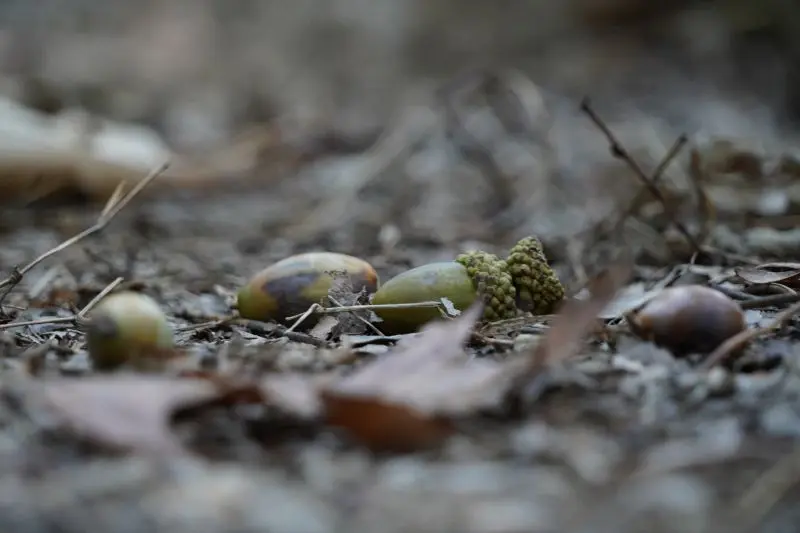
When acorns begin falling, I like to think of the forest floor as a giant buffet. But deer aren’t necessarily going to eat everywhere equally. One ridge might have very few acorns while another ridge 200 yards away is covered with them. That difference can be enough to change deer movement.
When possible, spend time walking and glassing the timber during the middle of the day. Look for areas where deer are feeding heavily. Pay attention to the trails leading to those areas, too. Fresh tracks and droppings can tell you that deer are using a particular ridge or oak flat. Rubs and scrapes can provide additional clues as the month progresses. The goal isn’t simply to find an oak tree. The goal is to find the oak tree or group of trees that deer are choosing over everything else. For example, last week, which was early October, I found 15 white oak trees all grouped. That, combined with a lot of sign on the ground and my camera showing a lot of does suddenly feeding in that area, aided in my decision to get in my saddle for an evening hunt. My goal was to harvest a doe. However, 20 minutes into the hunt, a mature 8 pointer that had also recently shown up on camera stood at 53 yards. After 15 minutes of watching the buck munch on acorns, he continued down the hill and, unfortunately, out of archery range. However, it was a reminder of how bucks can show up at any time, when their favorite food is literally raining out of the trees.
Not All Oaks Are Created Equal
Hunters often talk about “acorns” as though every acorn is the same; they are not. Different oak species produce different types of acorns, and deer can show preferences depending on what’s available at a particular time.
When the buck appeared slightly out of bow range, I was sitting in the middle of a cluster of white oaks. White oak acorns are often highly attractive to deer because they generally contain less tannin and have a sweeter taste than many red oak acorns. That doesn’t mean deer will ignore red oak acorns. In some areas, red oaks may provide the primary food source, especially when white oak production is poor. That’s why hunters shouldn’t assume they know what deer will eat simply by looking at a tree species. Let the deer tell you: if the ground underneath a particular tree is covered with fresh deer sign, that’s information worth paying attention to.
Hunt the Edges
Finding the food is only half the battle. During October, bucks aren’t necessarily going to spend the entire day underneath an oak tree. They still have bedding areas, security cover, and travel routes. This creates opportunities for the mobile hunter.
Rather than setting up directly over the food source, look for places where deer have to travel between bedding cover and the acorns. A ridge top, point, inside corner, bench, or narrow strip of cover can funnel movement. These locations can be especially good when they are positioned between an area where deer feel secure and a productive food source.
For saddle hunters like myself, this is where mobility can really pay off. If the first sit tells you the deer aren’t using the trail you expected, don’t be afraid to move. October is a month of changing food sources, and your setup may need to change with them.
The October Lull Isn’t Always a Lull
Perhaps the biggest lesson is that the October lull isn’t necessarily a period when deer stop moving. Sometimes, we simply stop seeing them because we’re hunting where they no longer want to be.
As acorns hit the ground, deer can abandon familiar food sources and spend more time feeding inside the timber. A buck that was previously walking past your camera every evening may suddenly be spending his evenings 300 yards away beneath a productive oak flat. That can make it seem like the woods have gone cold, when in reality, they haven’t. The truth is that the food has changed, and when the food changes, the deer change with it.
Follow The Food
October is a month of transition. Deer are beginning to change their patterns, bucks are becoming increasingly focused on breeding, and hunting pressure is beginning to accumulate. But before the rut really takes over, food can be one of the most important factors influencing where deer spend their time. When the October lull arrives, don’t automatically assume the deer have disappeared. Get out of the food plot and into the timber. Look for fresh acorns, find the trees producing the most food, follow the sign, and identify the trails connecting those food sources to bedding cover. Most importantly, be willing to move your stand.
Acorns can change everything in October. The hunters who recognize that change and adjust with it can turn an empty looking October woods into one of the best places to find a buck.