What October Whitetail Sign Is Telling You
October is an interesting month for whitetail hunters. One week, the woods can seem almost quiet, with little fresh sign and few daylight sightings. Fast forward to the next week, licking branches are trimmed, fresh scrapes appear beneath overhanging limbs, and rubs begin showing up along trails that seemed unremarkable just days earlier. For bowhunters, these changes are worth paying attention to. Scrapes are becoming more active, bucks are checking their surroundings, and the gradual shift toward the pre-rut is beginning to influence deer movement. But a scrape is more than bare dirt beneath a tree. When you know how to read the sign, it can tell you which deer are using an area, how they travel, and where you might have an opportunity to intercept a mature buck. The trick is knowing which scrapes deserve your attention and how to hunt them without educating the deer you’re trying to kill.
Not All Scrapes Are Created Equal
Finding a scrape in October is exciting, but hunters shouldn’t assume every scrape is being visited by a mature buck. Young bucks, does, and other deer can all contribute to scrapes, and some may receive little attention after their initial creation. Remember, deer make scrapes all year. The key is knowing when they mean more.
The first thing to consider is the location. Scrapes along field edges, logging roads, field corners, and openings in the timber are easy to find because deer can use them while moving between bedding and feeding areas. These locations can be productive, especially during evening hunts when bucks begin moving toward food sources. However, some of the most interesting scrapes are tucked inside the timber along natural travel corridors. A scrape beneath an overhanging branch on a ridge, near a crossing, or along a trail connecting two areas of thick cover may offer a better opportunity to get a buck during daylight.
Look at the surrounding area rather than focusing solely on the scrape itself. Fresh tracks, a series of nearby rubs, and trails connecting bedding cover to an October food source can all indicate increased deer activity. Multiple trails converging within bow range of a huntable tree can make the location even more appealing. These details help determine whether a scrape is simply a signpost along a travel route or part of a location worth hunting. A scrape with fresh activity in a good travel corridor is often more valuable than a large, impressive scrape in a location deer visit only after dark.
Fresh Sign Means More Than a Big Scrape
It’s easy to get excited about a scrape the size of a truck hood, but size alone doesn’t tell you how recently a buck visited or whether he will return. A smaller scrape with fresh tracks, moist soil, and a recently worked licking branch may provide better information than a large scrape that has been sitting untouched for several days.
Pay attention to the details. Freshly disturbed leaves and dirt, tracks entering and leaving the scrape, and a licking branch. I believe that the licking branch above the scrape attracts more bucks than the actual scraped area on the ground. Signs of recent use can all indicate activity. If you find several fresh scrapes along the same trail, you may be looking at a route that deserves further investigation.
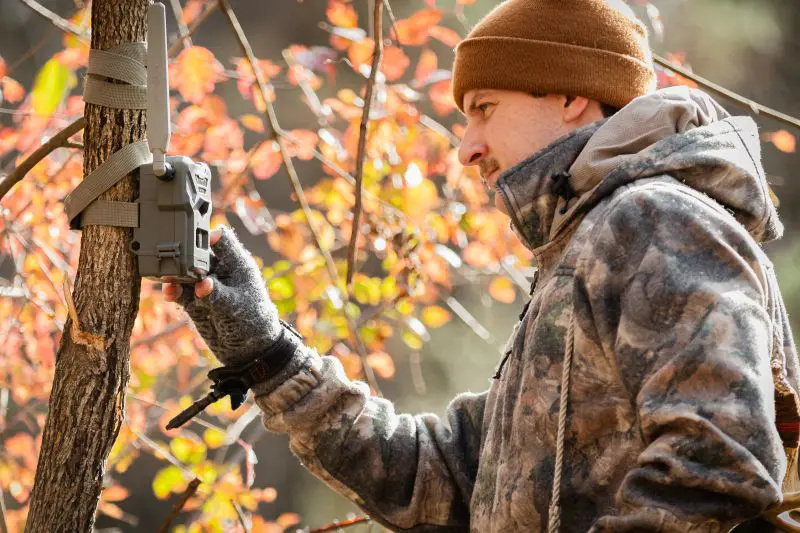
The overhanging branch is vitally important. Deer investigate and scent-mark these branches, making them a key part of the scrape. If the branch has been freshly worked, it provides another clue that deer are actively checking the location. This is also where I love using trail cameras on a scrape. They can help confirm what is happening, but they are a strategic tool when trying to narrow down a buck when hunting. A camera placed to monitor a scrape without repeated trips through bedding cover can provide valuable information. Cellular cameras can be especially useful because they let you monitor activity without having to visit the location as often. In fact, one of my most memorable scrape cameras happened when my camera was a few feet into the timber, in an area I was trying to watch deer entering and leaving a field. After the cellular camera had been there for a few months, a late October scrape was made, barely in view of the camera. I was able to capture many different bucks, all checking that scrape, and never once had to visit the area. It was a cool experience to watch as all the bucks visiting the scrape were at night for the first week or two, then they started daylighting. The key in these situations is to not become so focused on getting pictures that you lose sight of the bigger picture. A camera may show a buck visiting a scrape at 1 a.m., but the location could still be valuable if that scrape lies along a trail he uses during daylight or near an area where his movement patterns are changing. Two days after one particular buck showed himself during daylight hours, I was able to harvest him within 100 yards of the scrape.
October Scrapes Can Reveal a Buck’s Travel Route
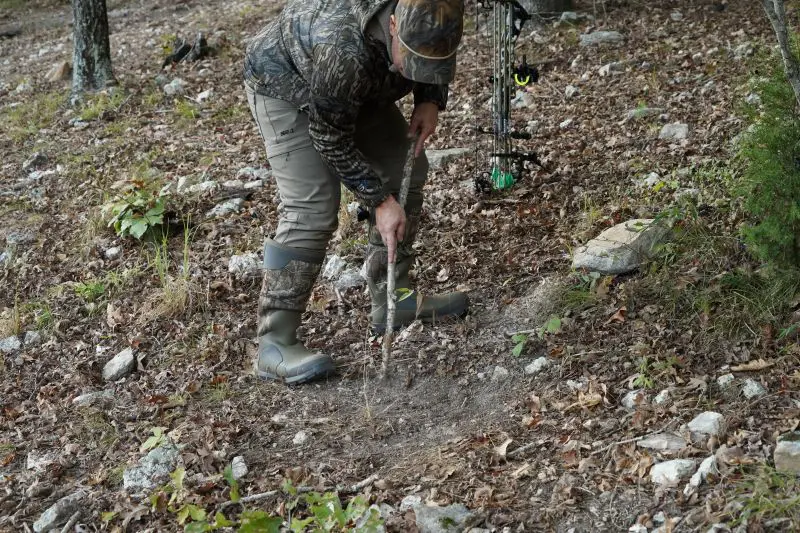
One scrape rarely tells the whole story. A series of scrapes can reveal much more about how bucks are moving through an area.
As October progresses, bucks often begin checking scrapes more regularly, although activity varies with location, individual deer, food sources, and hunting pressure. Some scrapes may be visited by several deer, while others are used more consistently by one buck. When scouting, look for a sequence of scrapes along a ridge, logging road, or transition between thick cover and more open timber. Follow the sign far enough to determine where the trail leads, but avoid pushing deep into likely bedding areas simply to see how far it continues. You may discover that a scrape line follows a natural travel corridor between two bedding areas or runs along the edge of a food source. Those connections can help you identify a place to intercept a buck rather than hunting directly over the scrape.
For example, if several scrapes are located along a ridge leading toward a thick patch of cover, try setting up downwind of the trail where it narrows or bends around the terrain. A buck checking the scrapes may pass within bow range without ever stepping directly into the scrape itself. This is especially useful when hunting mature bucks. Older deer don’t always approach a scrape from the most obvious direction, and they may scent-check the area from downwind before stepping into the opening. Instead of automatically hanging a stand directly above the biggest scrape, look for the route a buck is most likely to take when approaching it. When I killed my buck, he was skirting the edge of a nearby field, scent checking does, before he most likely was going to check the scrape again.
When You Should Hunt Over a Scrape
Timing matters when hunting scrapes. Early in October, many bucks are still following feeding and bedding patterns, and some scrape activity may occur primarily after dark. As the month progresses and the pre-rut approaches, bucks may begin checking scrapes more frequently and moving farther during daylight. That doesn’t mean every fresh scrape deserves an immediate hunt. The best time to hunt one is when its location, recent activity, and wind conditions all work in your favor.
On a field edge, scrapes can be excellent candidates for evening hunts, particularly when they sit between bedding cover and a food source. A buck may check the scrape on his way toward feeding areas, giving you an opportunity to intercept him before dark. Scrapes that are deeper inside the timber are often along travel corridors that may offer better opportunities during morning or midday hunts, depending on deer movement and the route you can use to reach your stand. However, be cautious about entering these areas in the morning if doing so could alert deer returning to their bedding cover. Especially in the early stages of the pre-rut.
The wind should also dictate whether you hunt a particular scrape. A scrape that looks perfect on a map may be a poor choice if the wind carries your scent toward the bedding area or the trail a buck uses to approach it. Also, don’t overlook hunting just off the scrape. Mature bucks may approach from downwind, circle the area, or investigate from cover before entering the open. A stand positioned along the downwind side of the travel route may offer a better shot opportunity than one directly over the scrape. The objective isn’t necessarily to watch a buck work the scrape. It’s to intercept him while he is checking it.
Mock Scrapes Can Help You Take Advantage of October Activity
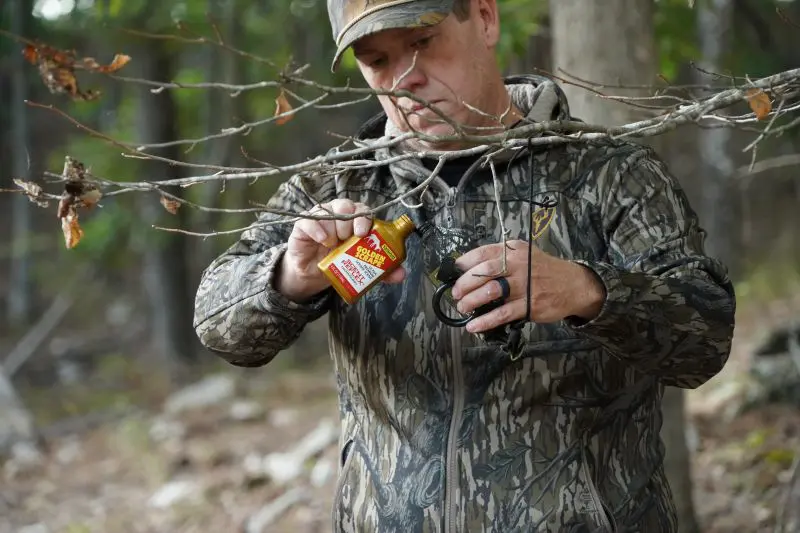
Natural scrapes are valuable, but mock scrapes can also be useful tools for bowhunters. When placed in an area deer already use, a mock scrape may encourage bucks to investigate a location within bow range. The most important factor is placement. Rather than creating a scrape in a random location, look for an existing trail, a natural opening in the timber, or a travel corridor where deer already pass regularly. A suitable overhanging branch can help make the location more realistic and get a faster response.
Mock scrapes can also be useful for monitoring activity. A trail camera positioned to observe the scrape may reveal which deer are using the area and whether movement is increasing as October progresses. However, a mock scrape isn’t a substitute for good scouting. It won’t necessarily pull a mature buck away from his established travel route, and there is no guarantee that a buck will visit during daylight. Remember to wear rubber boots, your Blocker gear, and keep human scent and disturbance in mind when creating and maintaining mock scrapes. Wear clean footwear, limit unnecessary visits, and avoid repeatedly walking through likely bedding areas. If the location is already a productive travel corridor, there’s little reason to turn it into a high traffic scouting destination. A well placed mock scrape should complement the natural movement already happening in the area, not force you to disturb it repeatedly.
Don’t Ignore the Food Sources
Scrapes may be heating up, but food still matters in October. Acorns, crops, food plots, and other food sources can influence where deer are hanging out. As preferred food sources change, bucks may shift their travel routes, and scrape activity may change along with them. This is why hunters should pay attention to the relationship between scrapes and feeding areas. A scrape located along a trail leading toward a productive oak flat may be worth investigating, especially if fresh tracks and other sign indicate regular use. On the other hand, a scrape that was active earlier in the month may become less important if deer begin concentrating on a different food source. Don’t assume that increasing scrape activity automatically means bucks will abandon their feeding patterns. During October, food, cover, weather, and hunting pressure continue to influence deer movement. Scrapes are one piece of the puzzle, and they become more valuable when considered alongside everything else happening in the woods.
Know When to Leave a Scrape Alone
One of the biggest mistakes hunters make is overhunting sign. A fresh scrape can be difficult to ignore, especially when a trail camera confirms that a mature buck is visiting. But if that buck only shows up after dark, repeatedly entering the area may make your chances even worse. If the wind is wrong, access is poor, or the scrape sits too close to a bedding area, wait for a better opportunity. Continue monitoring activity from a distance or hunt another location that allows you to approach without disturbing the area.
The same principle applies to checking cameras and refreshing mock scrapes. Every trip into the woods creates an opportunity to leave scent or alert deer to human activity. Make those trips count, and avoid turning a promising location into a place bucks associate with danger. Sometimes, the best way to take advantage of a scrape is to leave it undisturbed until the right day arrives.
Follow the Sign, Then Make Your Move
October scrapes can provide valuable clues about what whitetails are doing as the season progresses. Freshly worked licking branches, fresh scraped dirt, tracks, and scrape lines can help identify used travel corridors and reveal where bucks are spending their time. But the scrape itself isn’t always the best place to hunt. Its location in relation to bedding cover, food sources, terrain, and prevailing winds may tell you more than its size or appearance.
As October moves toward the pre-rut, continue looking for changes in deer activity. Combine fresh sign with trail camera information and pay attention when multiple clues point toward the same area. When conditions line up, don’t be afraid to make a move with a mobile stand or saddle setup and position yourself along the trail a buck is likely to use.