
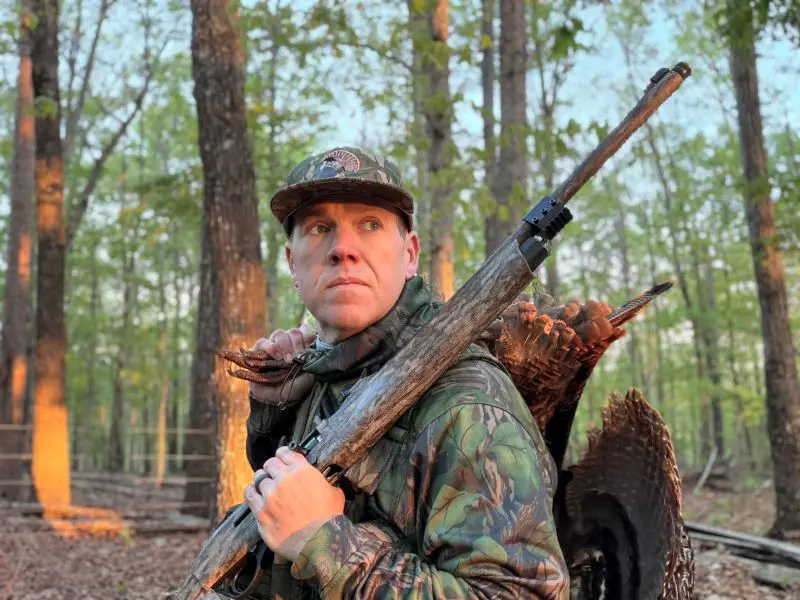
There are key moments in every turkey season when saying less is the best strategy. Early on, gobblers are often already paired up with hens, making them less responsive to calls. As the season wears on, the woods tend to quiet down, usually because the remaining birds have been pressured, educated, and made cautious. In these situations, dialing back your calling can be the difference maker, and sometimes the only way to coax a wary old tom into shotgun range.
When calls stop working, or worse, start working against you, it’s time to change your game. Killing a mature tom without making a sound isn’t just possible; it’s often the most effective strategy at specific times of the season or on heavily hunted ground.
Why Go Silent?
Mature gobblers don’t get old by being careless. On pressured ground, especially public land, they can start to associate calling with danger. They’ve heard every slate, box, and diaphragm in the county. Some have been called in and missed; others have watched a flock mate disappear after responding to a “hen” that wasn’t what she seemed. Sometimes, silence is what lowers their guard.
I was reminded of that on a recent hunt. During the youth portion of the season, I had called several toms into close range while mentoring a young hunter. A week later, I returned to the same property, knowing those birds had likely been educated and might be wary of calling.
Opening morning of the regular season, I eased back into the area where birds had been pressured just days before. At first light, two toms gobbled from the roost about 200 yards away. As I started to close the distance, I caught soft clucking from a bird in a tree just 40 yards from me. Instead of pushing further, I quickly and carefully set out a hen and jake decoy, then slipped in beside a large pine tree with a rock at its base, perfect cover if a bird showed up.
For the next ten minutes, I sat still and quiet. The distant toms gobbled at an owl and at other birds farther off, but I resisted the urge to call. Finally, just before fly-down, I gave a soft series of light hen yelps… then went silent again.
Five to ten minutes later, I spotted movement, three turkeys slipping through the field toward my decoys. In the dim early light, I couldn’t tell what they were. Then the lead bird strutted, and I caught the flash of three bright red heads. Three toms, and not one of them had made a sound.
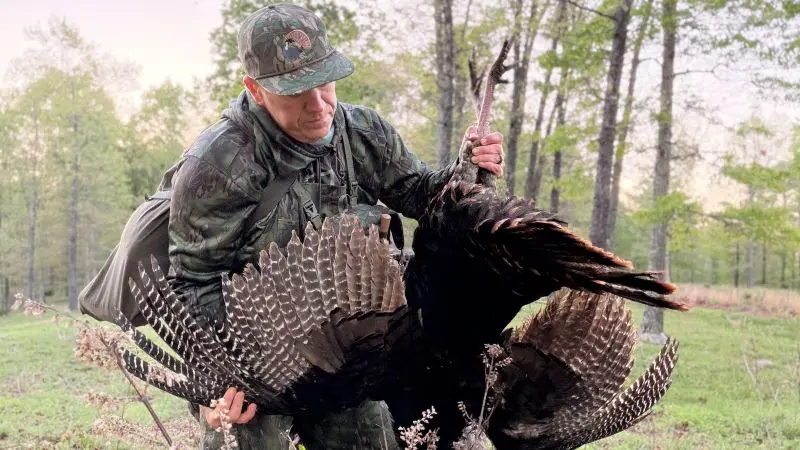
They walked straight in. When the lead bird broke from the group and closed to fifteen yards, I took the shot. As I stood over him and checked the time, 6:05 a.m., it hit me just how quickly it had all happened. After thirty years of turkey hunting, it was one of the fastest hunts I’ve ever had.
And I’d only made one call. Silence did the rest.
Instead of trying to convince a gobbler to come to you, no-call tactics often focus on being where the tom already wants to be, and being there before he arrives.
Roost Intel Without the Risk
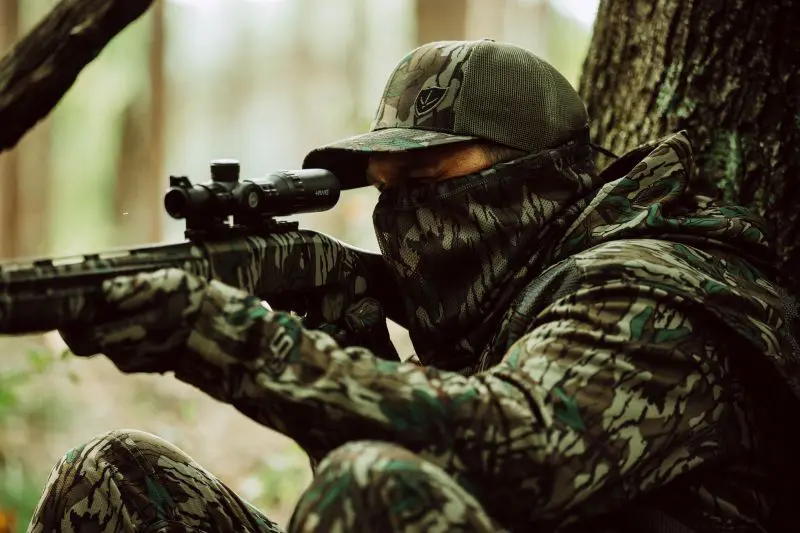
Pinpointing a roost without overcalling is key. Forget the aggressive owl hoots, crow calls, or yelping loudly on a call. Instead, listen at first light from a distance. When walking in slowly and quietly on my recent hunt, I was able to hear turkeys making soft sounds, which, in turn, kept them from spooking out of the tree.
Noting consistent roost trees over several days is also critical for moving in close when it’s time to hunt without calling. Once you know where a bird sleeps, whether it is because of your scouting efforts or by hunting experience in that specific area, you can set up along a gobblers natural fly-down route without ever making a sound. The goal isn’t to pull him, it’s to already be in his path.
Set Up in the Right Place or Go Home
With no call hunting, the setup location is everything. You’re not going to bring a bird across a field or over a ridge without calling. You need to be inside 100 yards of where he wants to go, positioned with good visibility and clear shooting lanes.
If you’re playing the “no call” game, it is probably because he is a smart, experienced bird. When setting up, you must be hidden well enough to fool a bird that’s looking for danger, not hens. Pressured or experienced gobblers are always on the lookout and skeptical about everything. Think ambush, not attraction. Try sitting on the edges of strut zones, logging roads, and field corners where birds naturally travel; these are all high percentage spots. If a gobbler can walk by you without ever needing to be called, you’re doing it right.
Use Decoys Sparingly or Not at All
Decoys can often help, but they can also hurt. Mature toms often hang up when something doesn’t feel right. A poorly placed decoy or one that spins unnaturally in the wind can send a bird the other way.
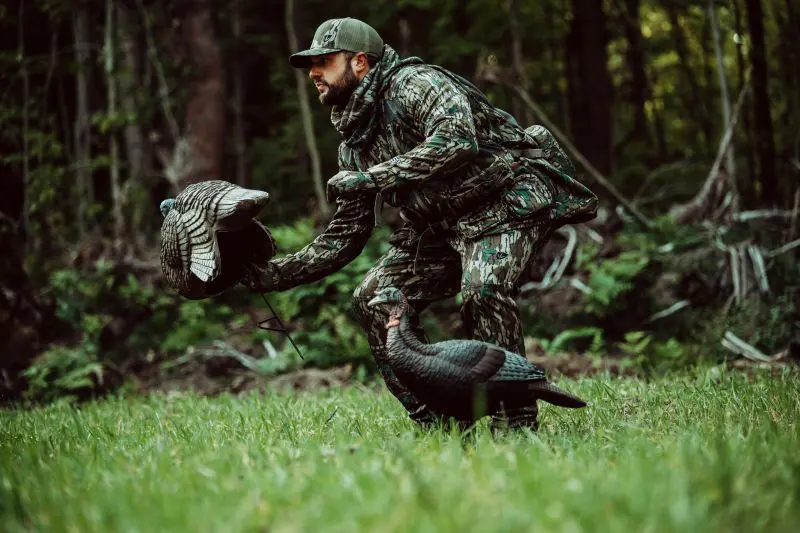
Keep it simple with a single hen and a jake, and again stay quiet. Place them where a gobbler will naturally pass, and they’ll be surprised to see the setup because they haven’t heard them say anything. This creates a sense of urgency with mature toms.
On my recent hunt, my decoys were already in place, in the tracks of a farm road that the turkeys naturally use daily. When the three toms came walking through early, they walked right to the jake decoy because they thought he was getting to the hen before them.
Patience Kills More Birds Than Calling
No call hunting doesn’t normally happen quickly; it is a waiting game. You might sit for hours without hearing a gobble. Many hunters give up too early, assuming nothing is happening. Meanwhile, the gobbler is already on his way, just not announcing it. Be patient. You’ll hear birds you could probably strike with a call, but that’s not the point. The goal is to beat a mature gobbler at his own game. That is why many veteran turkey hunters refer to this style of hunting as a chess match rather than a calling contest.
Calling will always have its place in turkey hunting. But when pressured, birds shut down, silence speaks louder than any call ever could. If you’re chasing mature toms that seem impossible to kill, try saying nothing at all. You might be surprised at how much more you start hearing.